We seal attics, walls, metal buildings and warehouses across Houston so your air conditioner stops fighting a losing battle. Most homes we foam see a cooler second floor within a day.
Mon to Sat, 7:00 am to 6:00 pm. Same week site visits in most of Harris County.
Full liability coverage and workers comp on every job, residential or commercial.
Closed cell at 2 lb density and open cell at 0.5 lb, sprayed to the thickness the job calls for.
We mask, we tape, we sweep. Overspray stays where it belongs and the plastic leaves with us.
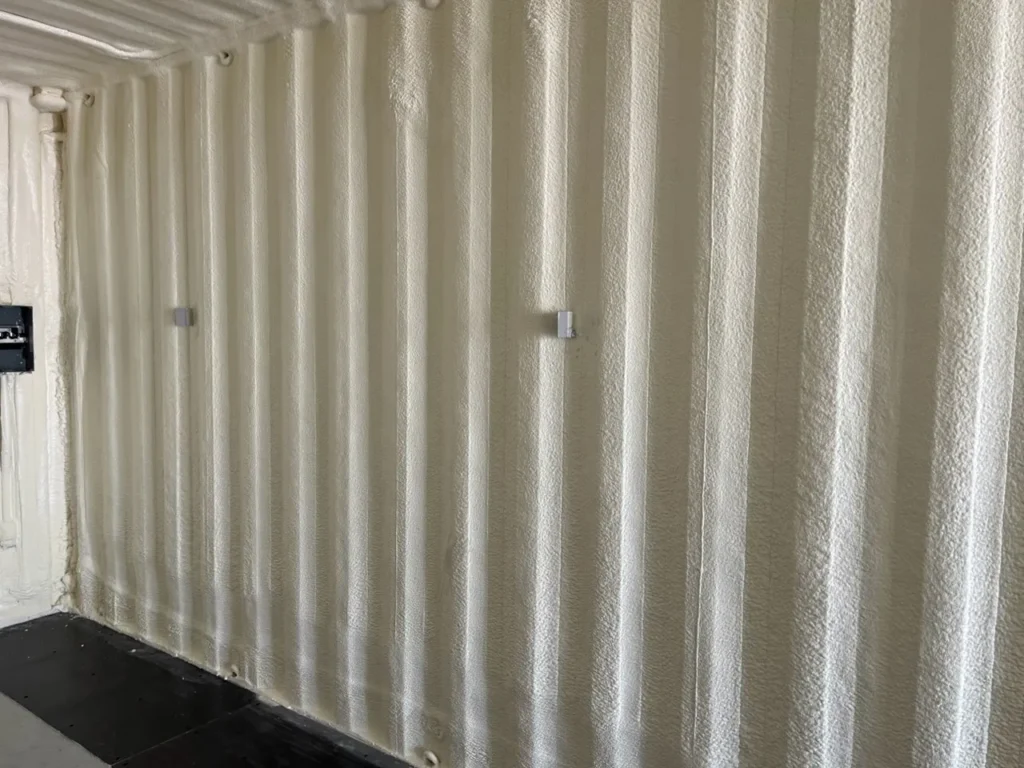 Closed cell
Rigid 2 lb foam that blocks moisture and adds strength. First pick for metal buildings, crawl spaces and flood prone walls.
Read more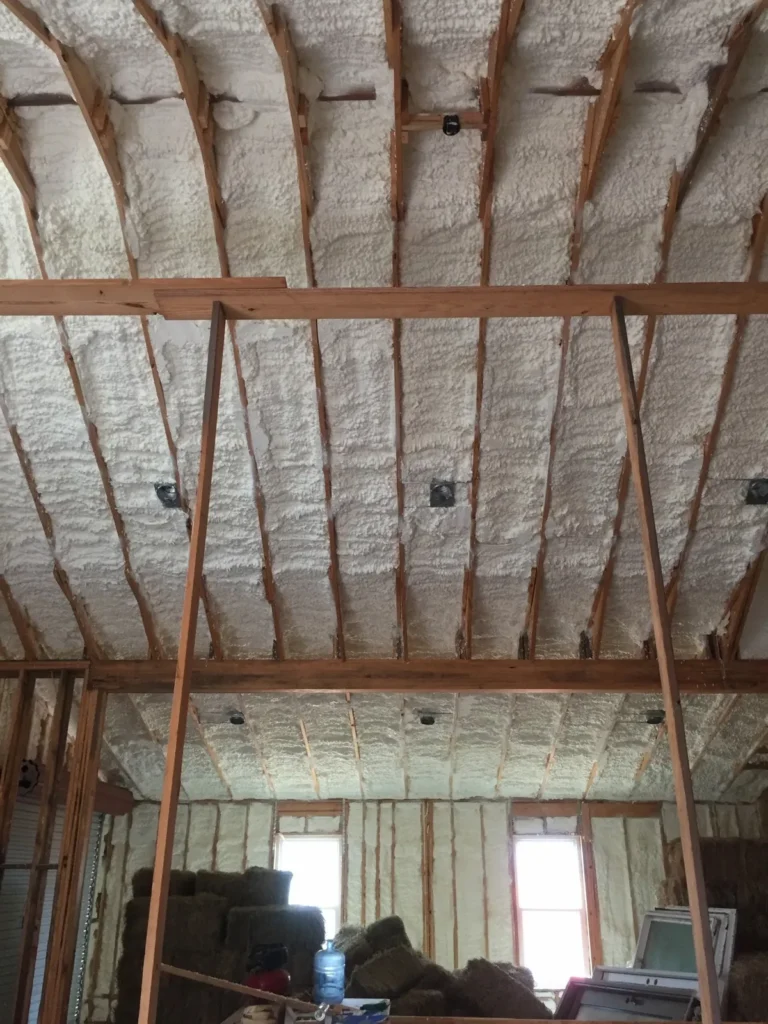 Open cell
Light, expanding foam that fills every rafter bay and quiets a house down. The value pick for attics and interior walls.
Read more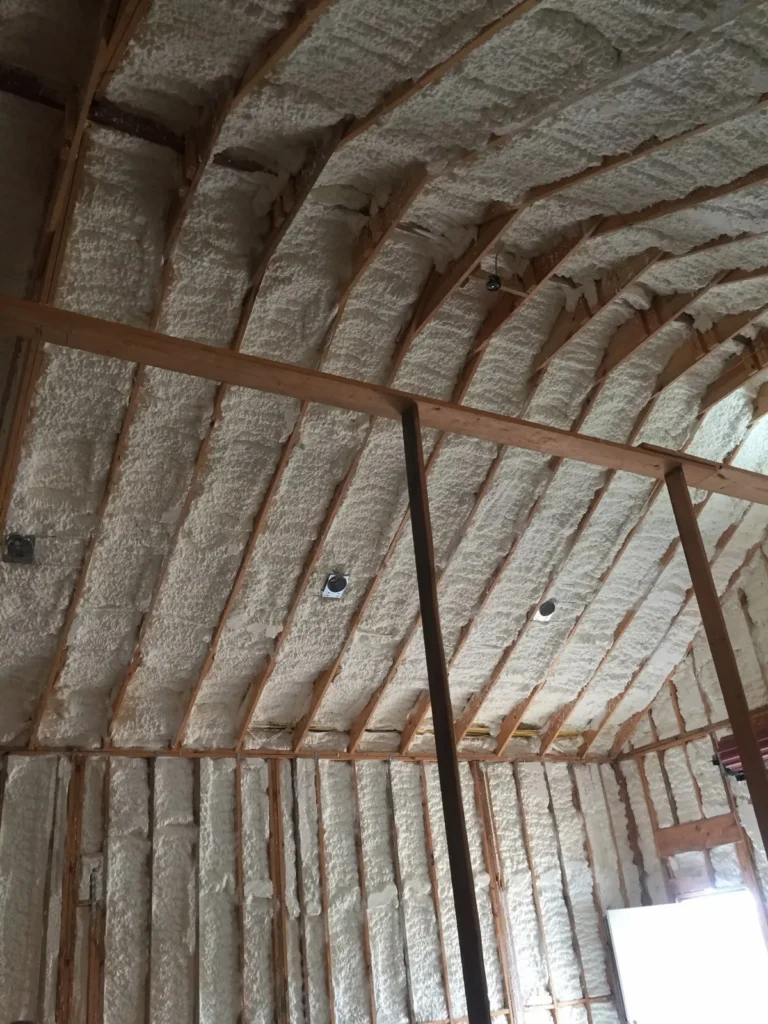 Attics
We foam the roof deck and bring the attic inside the conditioned envelope, so ducts stop baking at 140 degrees.
Read more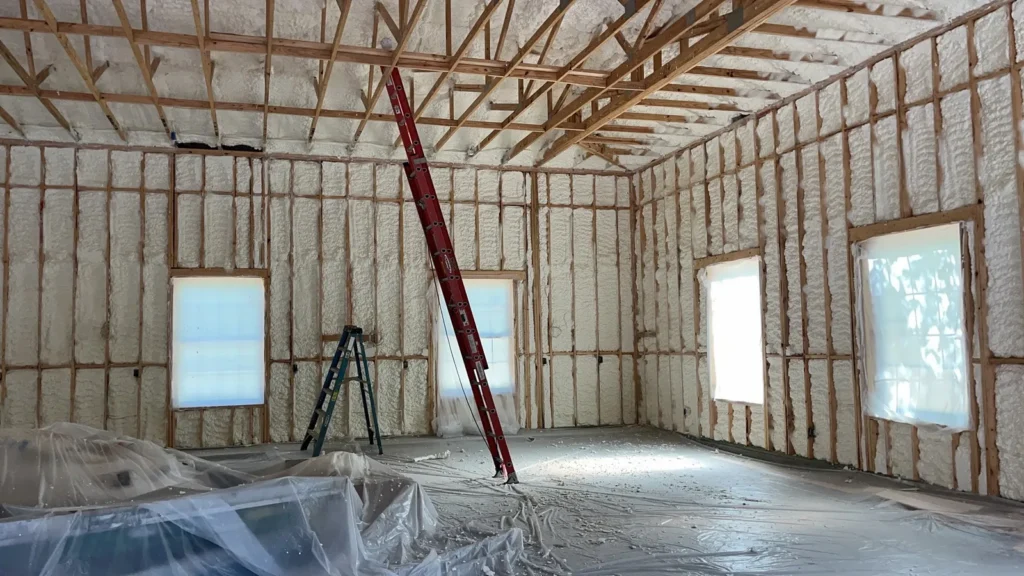 Walls
WallsOpen stud cavities on new builds, additions and remodels, sprayed flush and trimmed clean for drywall.
Read more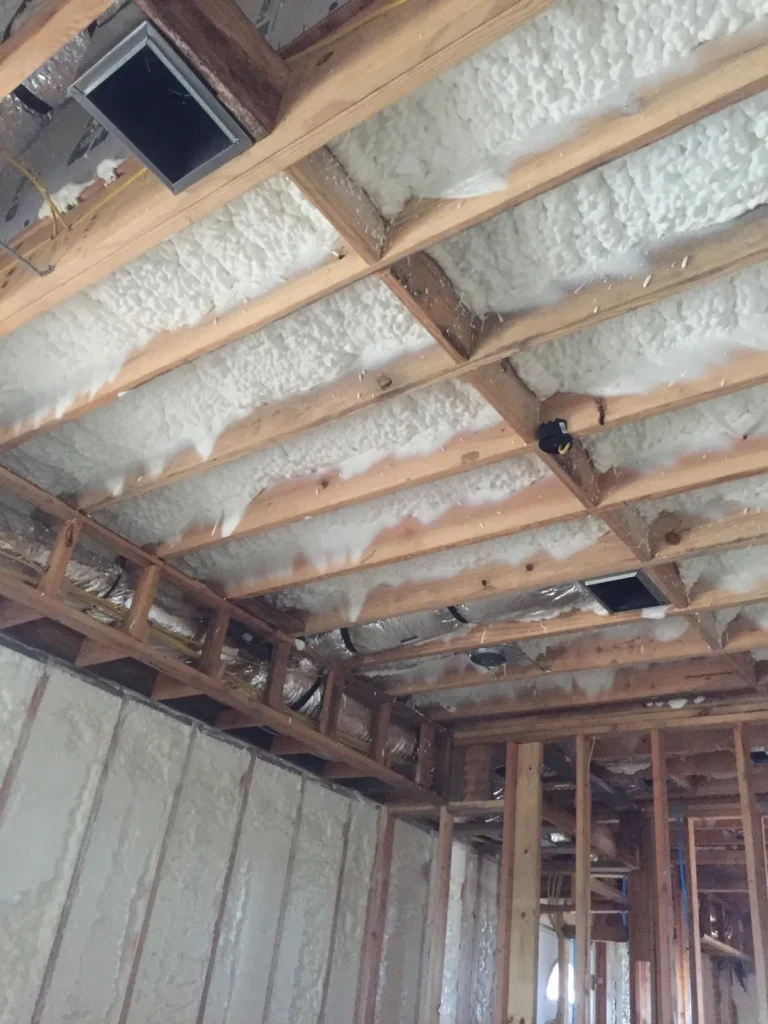 Removal
Blown in fiberglass, wet cellulose, rodent damage and storm damage vacuumed out and bagged before we spray.
Read more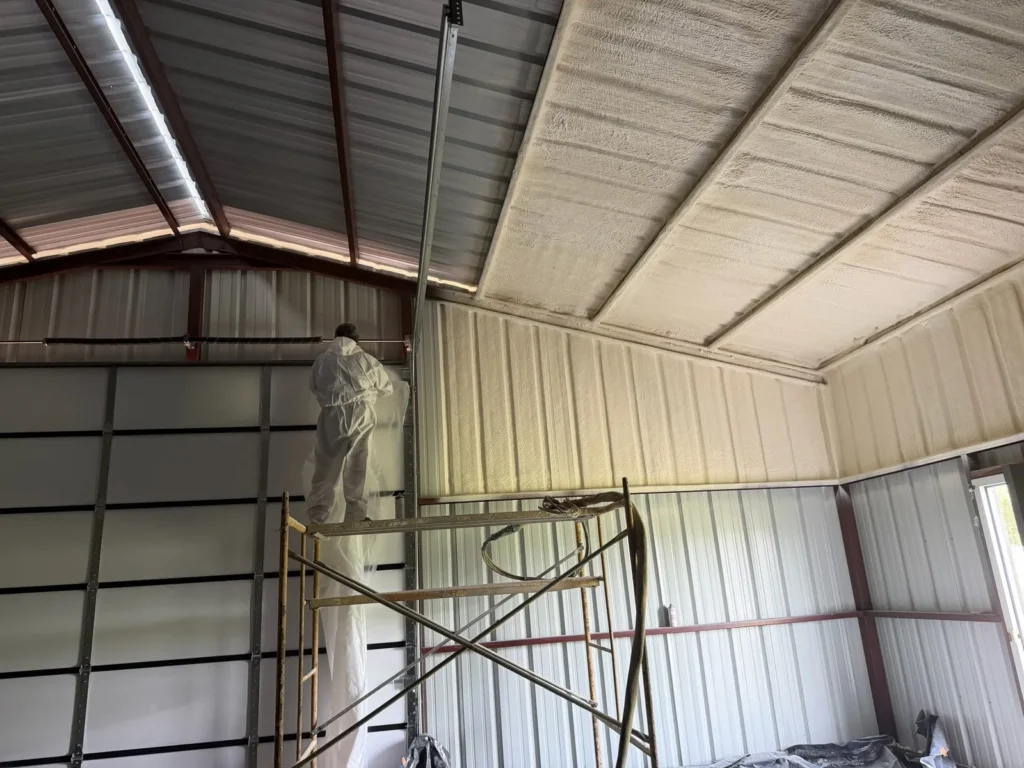 Commercial
Warehouses, shops, cold storage and shipping containers. Night and weekend work so your floor keeps running.
Read more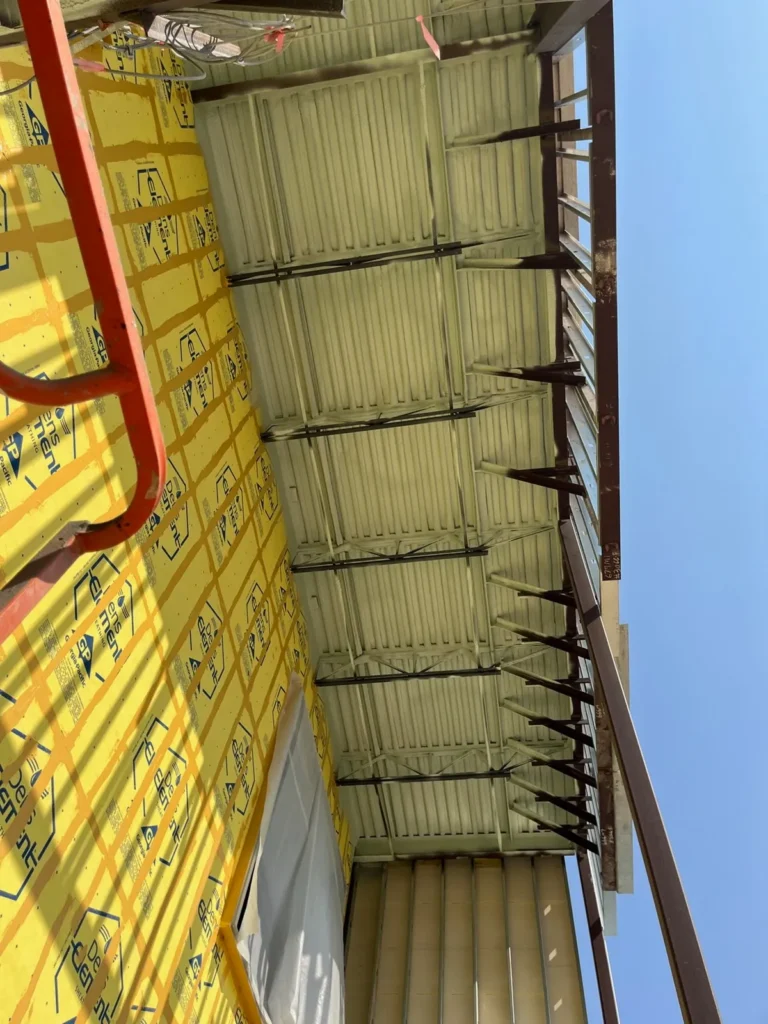 Roofing
Roof foam plus silicone or acrylic topcoat for flat and low slope roofs that leak at the seams.
Read more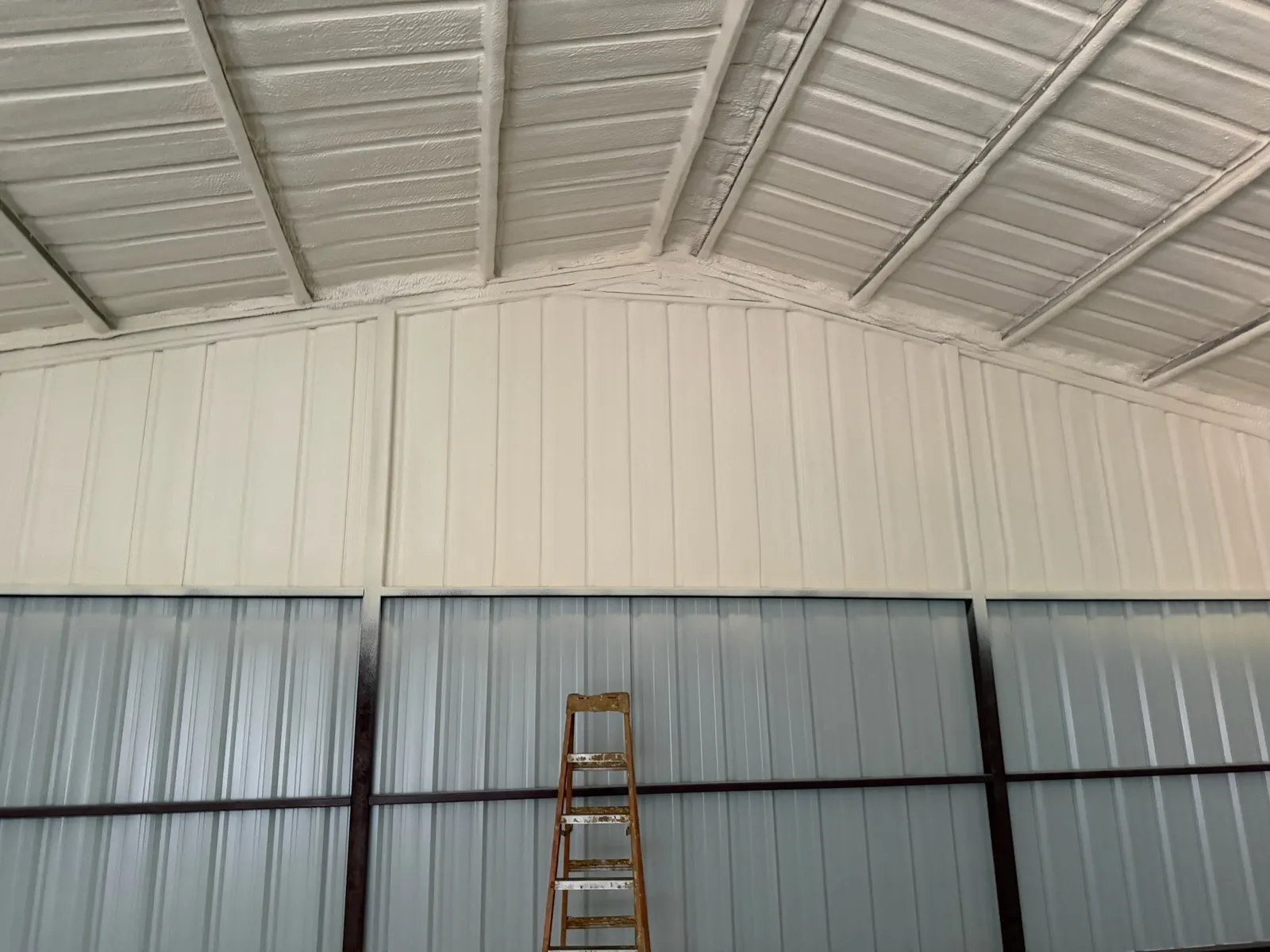
Batt insulation slows heat down, but it does nothing about the air moving through your walls and attic. On the Gulf Coast that air carries water. That is where the musty smell, the sweating ducts and the sticky upstairs bedroom come from.
Spray foam is insulation and air barrier in one pass. It sticks to the roof deck, seals the top plates, fills around wiring and blocks the gaps a batt can never cover. Closed cell adds a vapor retarder on top of that, which matters here more than it does almost anywhere else in the country.
Someone from the crew walks the attic or the shop, measures cavity depths, checks for old leaks and takes photos. Fifteen to thirty minutes on site.
Square footage, foam type, thickness, R value, prep work and cleanup, all on one page. No line item appears later that was not on that page.
Plastic over floors and openings, removal first if there is old insulation, then foam in lifts to the thickness we quoted.
Foam shaved flush where drywall lands, trash bagged, photos of the finished work, and a walkthrough before the rig leaves.
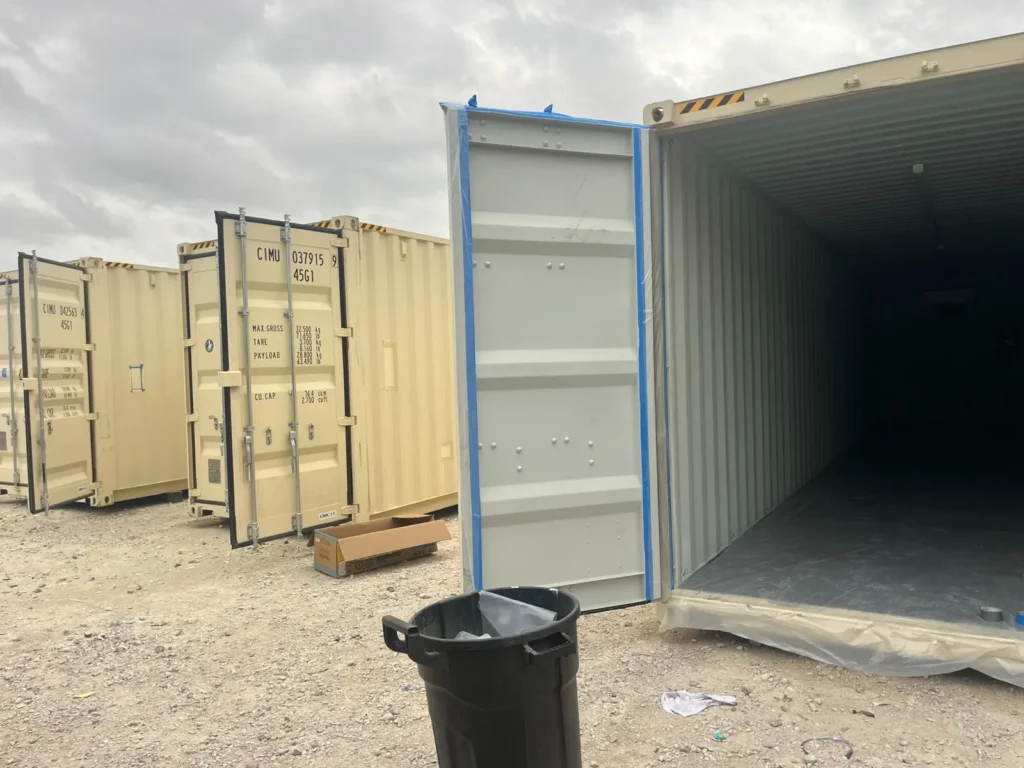
Container fleet in northwest Houston, closed cell at 2 inches on walls and ceiling.
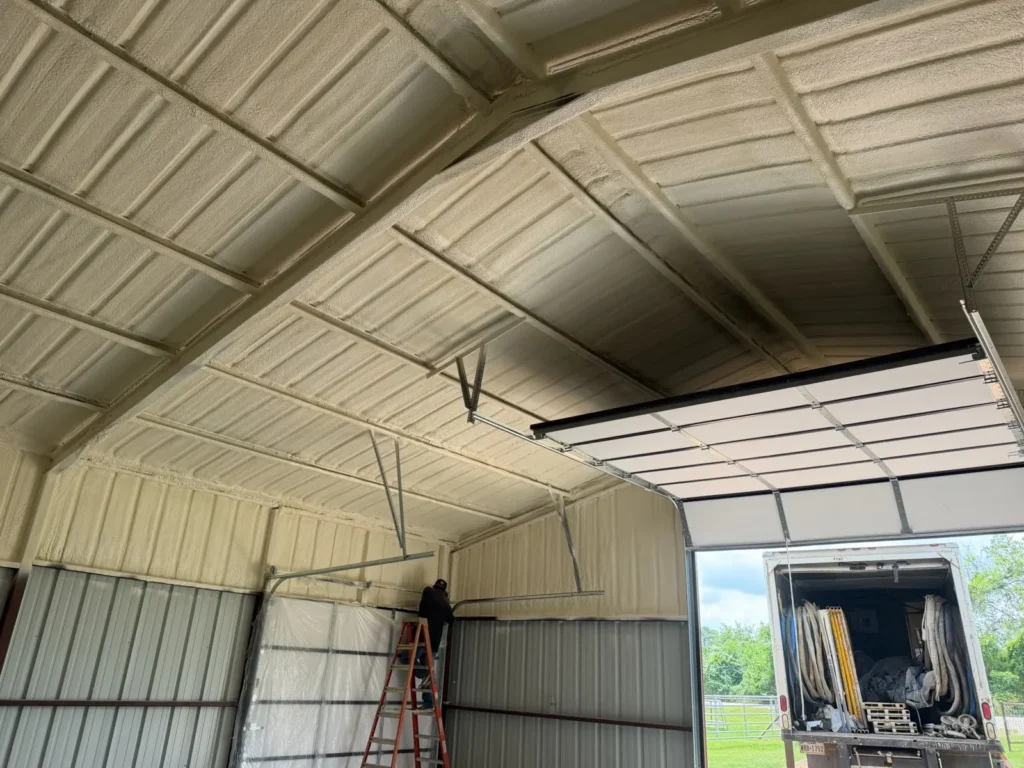
Equipment barn in Katy, roof deck foamed with the doors open and the truck parked in the bay.
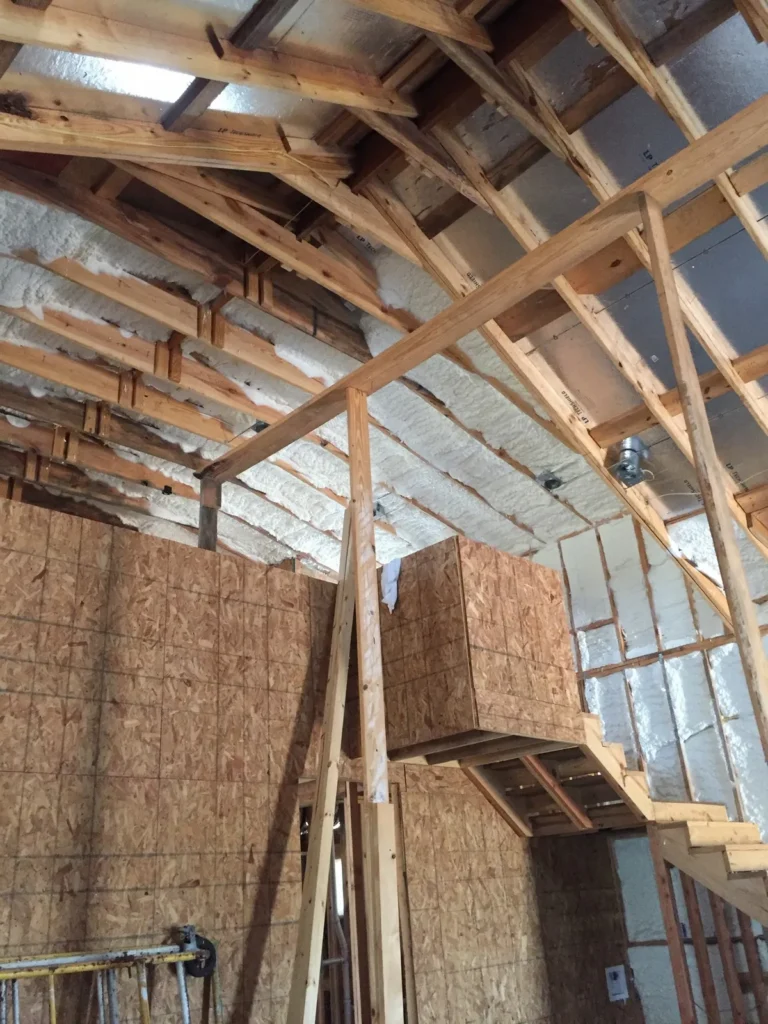
New build in Cypress, open cell on the roof deck and gable ends before drywall.
Send the address and a couple of photos. We will tell you what foam it needs and what it costs.