
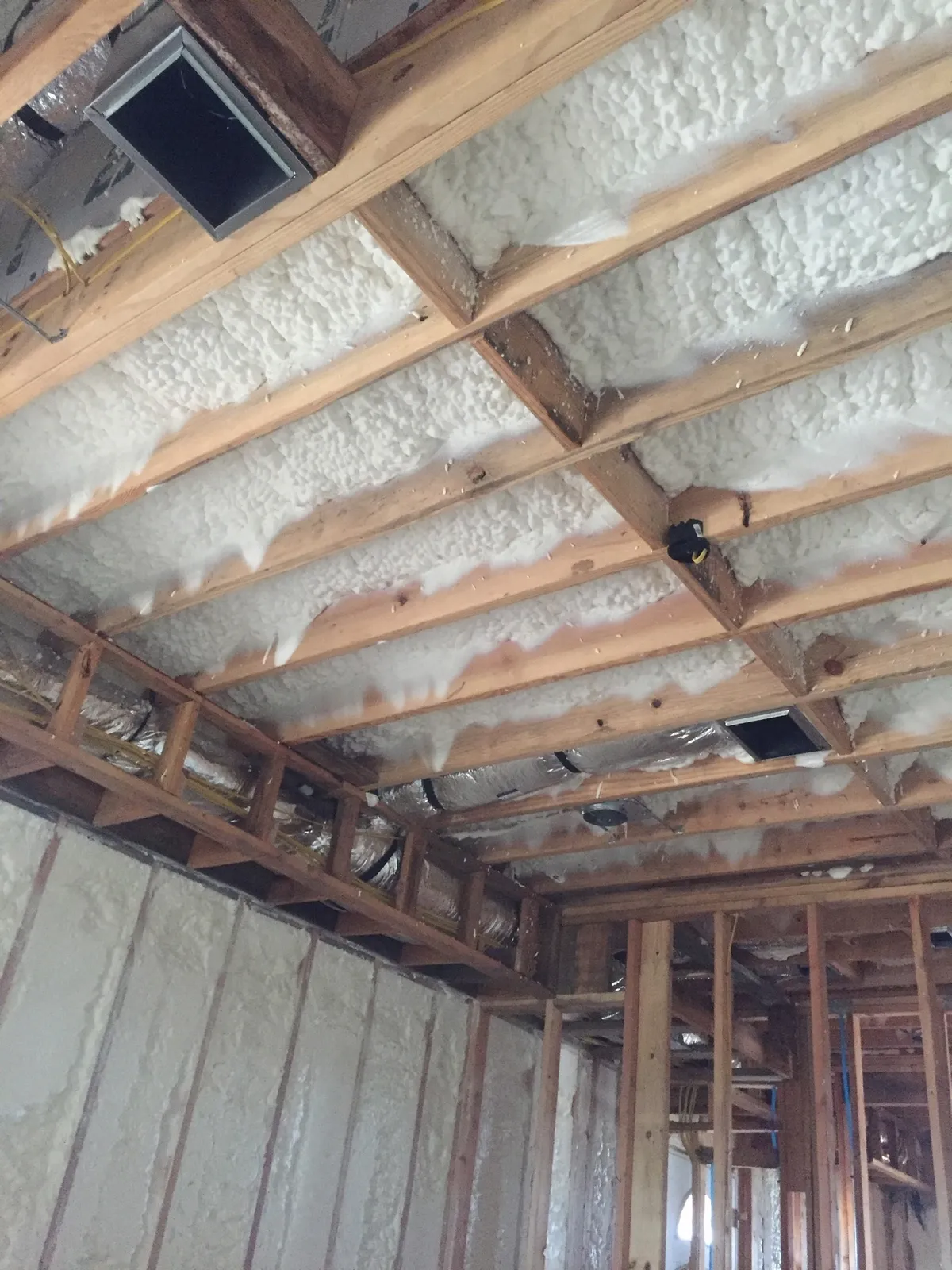
Joist bays cleared and foamed after removal. Ducts stay in place and get sealed as part of the work.
When insulation has to come out
Insulation is not permanent. In this climate it takes a beating, and there are five reasons we end up pulling it out of Houston attics.
Water got to it
A roof leak, a hail split, a burst supply line in the attic, a hurricane. Wet fiberglass loses most of its R value and does not fully recover. Wet cellulose compacts into a mat and holds moisture against the framing. Once it has been soaked it is trash.
Animals lived in it
Rats, squirrels and raccoons all nest in blown insulation and leave urine and droppings behind. That is a health issue and a smell issue, and no amount of new material on top of it will fix either. We remove it, and we tell you where the entry points are so your wildlife contractor can close them.
It settled into nothing
Blown fiberglass installed at ten inches in 1998 might be four inches of dense mat today. Cellulose settles even more. If yours is thin, matted or you can see the tops of the joists, the R value you think you have is not there.
You are converting to foam
This is the most common reason we do removal. Foam goes on the roof deck, not the attic floor, and the old material on the floor has to go. Two reasons: foam needs a clean bonded substrate wherever it lands, and leaving a layer of dusty fiberglass under a newly sealed attic means every bit of that dust stays in your air.
Fire or smoke
Smoke settles into insulation and stays there. If you are working through a fire claim, removal is usually one of the first line items and we can work with your adjuster's scope.
Removal is always quoted as its own line. You see what the demolition costs and what the new foam costs, separately, before anyone starts.
How we do it without wrecking your house
Removal is the messiest part of insulation work and the part where a careless crew shows itself. Our sequence looks like this.
For rodent contaminated attics we add a disinfectant treatment of the deck and joists after removal and before foam. It is not fogging theater, it is a wipe and spray of the surfaces that were soiled.
How long it takes and what it costs
Removal is priced by attic square footage, the depth and type of material, and access. A 1,500 square foot attic with six inches of loose fiberglass and a pull down stair is a half day. The same attic with wet, matted cellulose, a 20 inch hatch and a low slope roof is a full day and costs more, because it has to be dug out by hand and dragged to the hose.
Because we do both the removal and the new insulation, you get one crew, one schedule and one point of responsibility. There is no gap where your attic sits open for a week waiting on the next contractor, and no argument about who caused the mark on the ceiling.
Batt removal and wall work
We also pull batts out of walls during remodels, and out of metal building ceilings where sagging fiberglass has been hanging in the purlins for twenty years. That second one is a specialty of ours. Old lined metal building insulation is usually stapled and taped, full of dust, and often torn open by birds. It comes down, the steel gets wiped, and closed cell goes on the panel. The difference in a shop after that job is dramatic.
What we will tell you honestly
Not every attic needs removal. If you have clean, dry blown fiberglass at a reasonable depth and you are not converting to foam, adding to it can be the better spend. If you are converting to foam on the deck, it comes out. If it is soaked or contaminated, it comes out. Those are the rules we use and we apply them the same way whether the answer earns us more work or less.
Book a look at your attic and we will tell you which of those three situations you are in. Call (713) 281-9585 or email tenergyfoam.av@gmail.com. We are out of 6522 Lozano St, Houston, Monday through Saturday.