
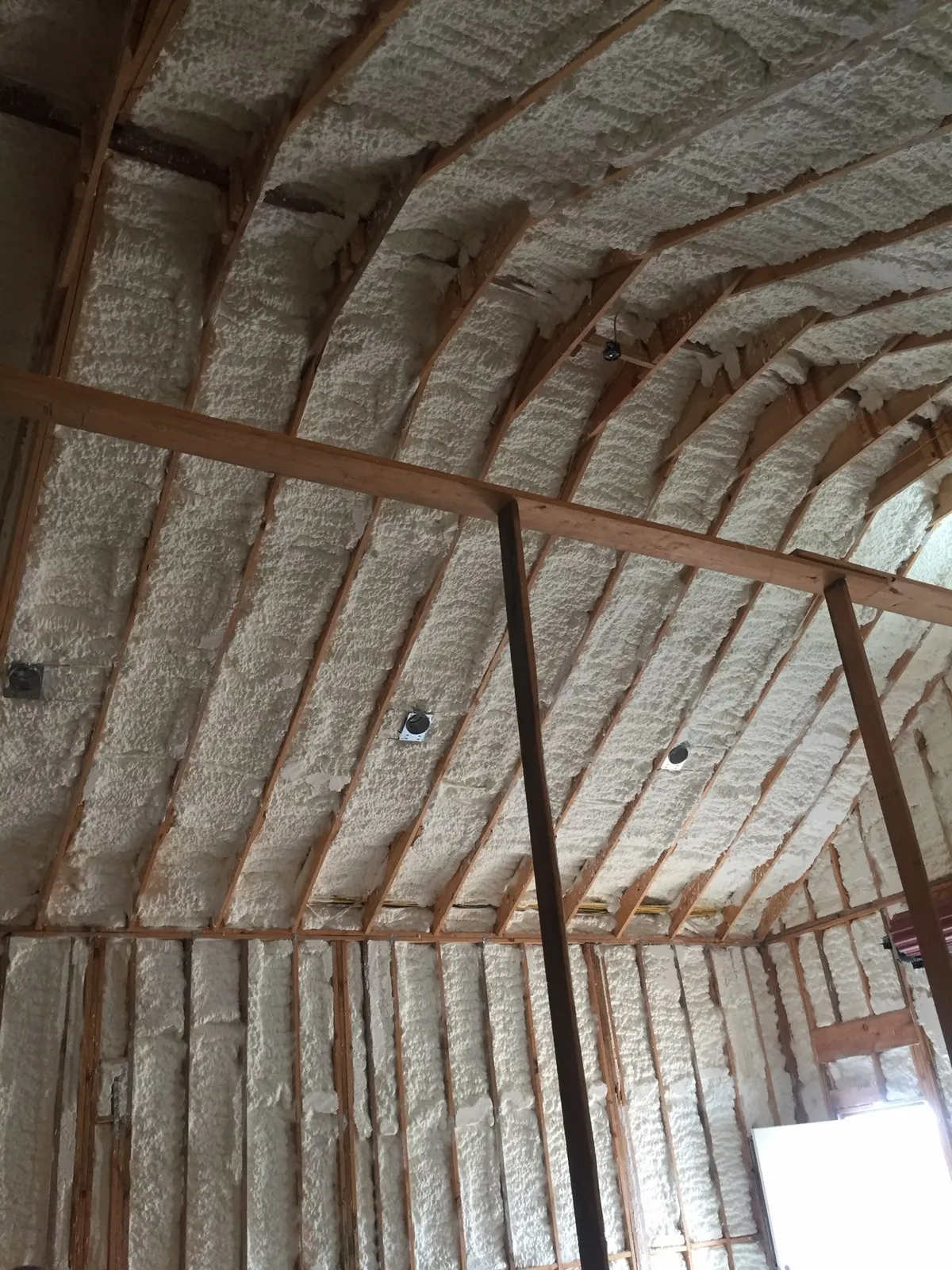
Barrel vaulted attic in west Houston, foamed deck to ridge with the gable ends sealed.
The problem with a Houston attic
A traditional attic is vented on purpose. Air comes in at the soffit, moves up the deck and leaves at the ridge, and the insulation sits down on the attic floor. That design was built for climates where the enemy is winter. Here, all it does is invite 95 degree air carrying 80 percent humidity into a space that already gets radiant heat from the roof. By two in the afternoon the air up there is 130 to 140 degrees.
Then look at what lives in that space. The air handler. The supply trunk. Every branch duct. Recessed can lights. In a typical two story Houston house, the system is trying to deliver 55 degree air through a metal box sitting in a 140 degree room. Losses run high, the second floor never catches up, and the unit runs almost continuously through August.
Sealing the deck changes the math. With foam on the underside of the roof, the attic becomes a semi conditioned buffer that usually sits within ten to fifteen degrees of the house. The ducts are no longer in an oven. The load drops, cycles get shorter and more even, and the humidity in the house comes down because the system is no longer short cycling against radiant gain.
What we do up there
1. Removal, if there is anything to remove
Old blown fiberglass or cellulose on the attic floor comes out. Foam belongs on the deck, and leaving damp material underneath a new air barrier is asking for trouble. We run a vacuum hose to the truck, bag everything, and haul it off the same day. Details are on the insulation removal page.
2. Air sealing the places foam cannot reach
Before the gun comes out we look for the leaks that matter: chase walls, plumbing stacks, dropped soffits over cabinets, the gap around the flue, the top of interior partitions, attic access hatches. Some get sealed with foam, some need sealant or sheet metal first. This is the part cheap bids skip.
3. Foam on the deck and the gables
We spray between the rafters, right up to the ridge, and around every truss web. The gable end walls get sprayed too, because a gable is a wall exposed to outdoor conditions on the other side. Vents in the soffit get sealed as part of converting the attic to unvented, which is what the assembly requires.
4. Thickness
Open cell at five and a half to six and a half inches gets you around R-20 to R-24. Closed cell at three inches gets you close to the same number in half the depth and adds a vapor retarder. Which one we recommend depends on the roof, the framing depth, the age of the shingles and your budget. Both are code viable in climate zone 2A when detailed right.
5. HVAC and combustion check
Sealing an attic changes how the house breathes. If you have an atmospherically vented gas water heater in that attic, we talk about it before we spray, not after. Same for whole house fans and power vents. It is a short conversation and it prevents a real problem.
Most attics we do are a single day job. Removal plus foam on a larger two story sometimes runs into a second morning.
What changes after the job
Common questions before we start
Will foam void my shingle warranty?
Major shingle manufacturers publish guidance that allows unvented attic assemblies. Deck temperatures rise a few degrees. We have not seen a Houston roof fail because of it, but if your shingles are within a couple of years of replacement, doing the roof first and the foam second is the sensible order.
Can I still store things in the attic?
Yes. Foam goes on the deck, not the floor, so your decking and your Christmas boxes stay right where they are, in a much cooler space.
Do I need to move out?
No, but plan to be out of the house during spraying and for a few hours after. We ventilate, and we tell you when it is clear.
What about the existing radiant barrier?
If you have foil sheathing, foam still works and still helps. We spray directly to it. You paid for the radiant barrier once and it keeps doing its job behind the foam.
Straight pricing on attic work
Attic jobs are quoted by square foot of deck area, the foam type and the thickness, plus removal if needed. Access and pitch matter: a steep roof with a 20 inch hatch takes longer than a walkable attic with a pull down stair. Everything is on one page before we start, and the number we write is the number you pay.
Send us the address and the square footage of the house, or just call and describe the problem. If your attic does not need foam, we will say so. We are on the road across Harris County six days a week and most site visits happen within a few days of your call.
Call (713) 281-9585 or email tenergyfoam.av@gmail.com.