
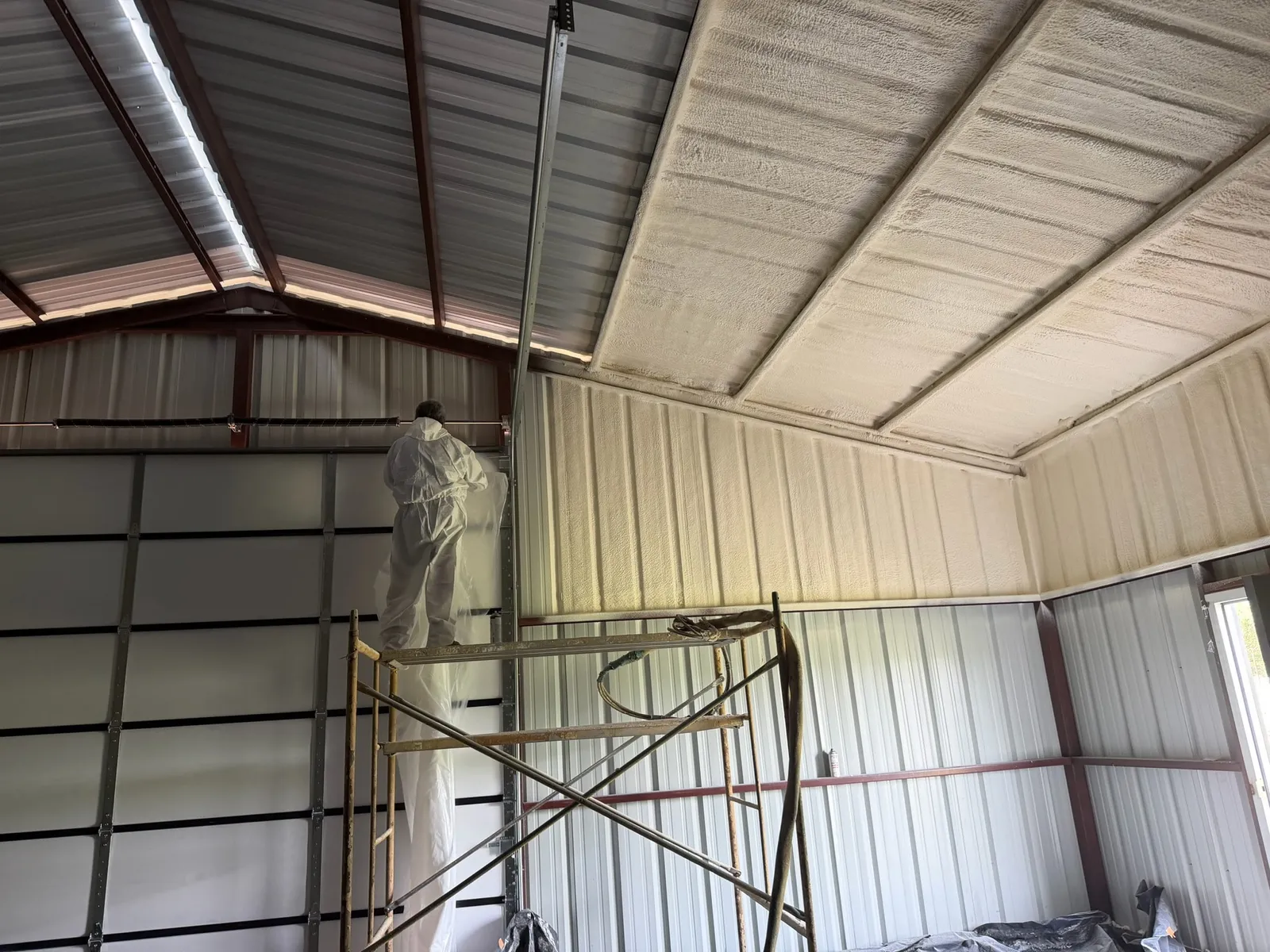
Supplied air and a full suit, every job. If a crew is spraying without them, that tells you something.
The week before
We confirm the date and the scope, and we ask you to do three small things. Clear a path to the attic hatch. Move anything you care about out of the attic, or tell us and we will cover it. Plan somewhere to be for the day, especially if anyone in the house has asthma or is pregnant.
If you have an atmospherically vented gas water heater or furnace in the attic, we will have talked about it already. Sealing an attic changes how combustion appliances draft, and that conversation happens at the estimate, not on spray day.
7:00 to 8:00 am, arrival and prep
Two trucks usually: the rig with the proportioner and the drums, and a crew truck. The rig parks as close to the access as we can get. Then prep, which takes longer than customers expect and is the best predictor of how the job will turn out.
Removal, if it is in the scope
If old insulation is coming out, this is next and it is the messiest hour of the day. A large hose runs from a vacuum at the truck up into the attic and material goes straight into sealed bags outside. Two techs work it. Then the deck and joists get a clean pass so foam has a surface to bond to.
Spraying
The proportioner heats both components and holds them at pressure. Foam is applied in lifts, meaning passes of one to two inches with a few minutes between them rather than one thick pass. This is not us going slow, it is how the material is designed to cure. Thick single passes trap heat, which causes poor adhesion, shrinkage and a smell that lingers for weeks.
We depth check as we go. On a typical 2,000 square foot attic, spraying runs three to five hours depending on framing and access.
If you ever hear a contractor say they can do a six inch attic in one pass, that is the moment to get another quote.
The smell
There is a distinct chemical smell during application. With ventilation running it drops off quickly once we stop spraying, and is typically gone or nearly gone by the evening. What is not normal is a fishy or sharp smell that persists for days. That means an off ratio mix or a bad lift schedule, and it is a workmanship problem, not a property of foam.
Our crew wears supplied air respirators and full suits the entire time, and nobody outside the crew should be in the sprayed space during application or for a few hours after. We give you a specific reoccupancy time before we leave.
Trim, cleanup and the walkthrough
Where foam has to be flush, like a wall face before drywall, we shave it with a hot knife or a trim saw and vacuum the shavings. In an attic there is less trimming, mostly cutting back around vents and boxes.
Then everything goes: plastic, bags, tape, offcuts. Floors get swept and vacuumed. We take photos of the finished work, including thickness in a few places, and walk it with you. If you are at work, the photos come by text or email the same evening.
The next few days
Foam is tack free in minutes and structurally cured within a day. Drywall can go up the next morning on a wall job. In an attic, you can store things up there again as soon as the space is reoccupied.
What you should notice: the house holding temperature longer, the AC cycling less, upstairs rooms evening out, and less noise from outside. What you might notice in a very tight house is that cooking smells hang around longer, because the house no longer leaks air the way it did. That is what ventilation is for, and on a very tight retrofit we will talk to you about a fresh air strategy.
Five questions worth asking any foam contractor
Any contractor worth hiring answers those without hesitating. Ours are on our about page and we will put them in writing on the quote.
Book it before summer
June through September is our busiest stretch, which is exactly when people decide they cannot take another August. If you want the work done before the heat, spring is the time to call. (713) 281-9585 or tenergyfoam.av@gmail.com.