
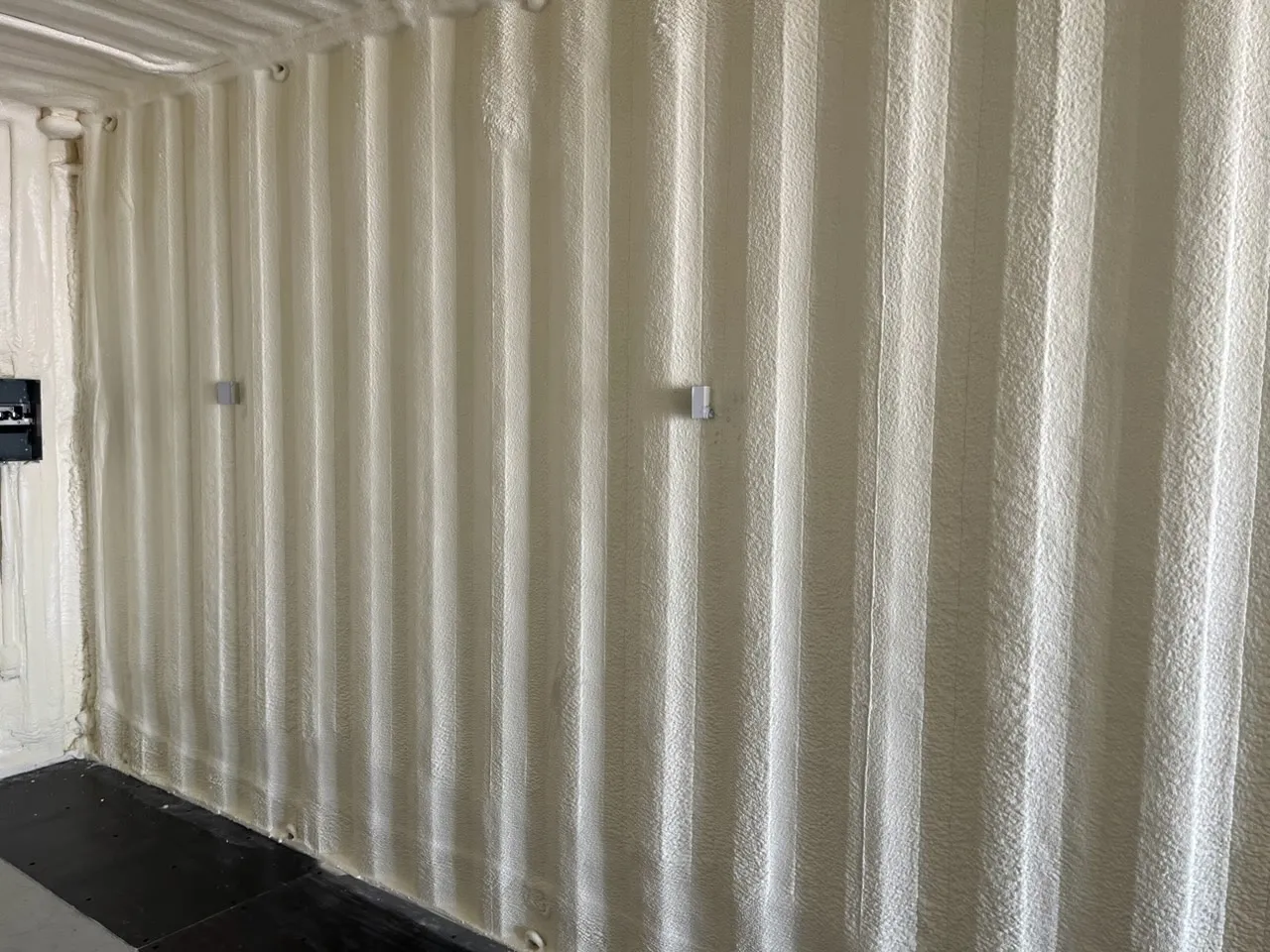
Closed cell on steel. On this assembly there is no debate to have.
The two materials in one paragraph each
Closed cell is about two pounds per cubic foot, rigid, roughly R-6.5 per inch, and acts as a vapor retarder at two inches or more. It bonds hard, adds stiffness to the substrate, does not absorb water, and costs more per square foot of coverage.
Open cell is about half a pound per cubic foot, soft, roughly R-3.7 per inch, and vapor open. It expands enormously so it fills irregular cavities completely, it absorbs sound well, and it costs less for the same coverage.
Both are air barriers when installed at full depth. That matters, because on the Gulf Coast air sealing is where most of the comfort improvement comes from.
The six questions
1. What is the substrate?
Steel, concrete, or anything that will condense water gets closed cell. Wood framing and sheathing can take either.
2. Does the assembly need a vapor retarder?
Crawl spaces, band joists, cold storage, coolers, containers and below grade walls all do. That points to closed cell. A vented or unvented wood framed attic in zone 2A generally does not require one, which opens the door to open cell.
3. How deep is the cavity?
If you need R-19 and you have three inches to work with, closed cell is the only material that gets there. If you have a full rafter bay, open cell reaches the same R value for less money.
4. Has water been here before, or will it be?
Flooded walls, coastal exposure, and anything near a slab that has taken water: closed cell. It does not hold water and it does not lose performance after it dries.
5. Does sound matter?
Bedroom walls, media rooms, home offices, houses near a busy road. Open cell is markedly better at absorbing airborne noise.
6. How old is the roof?
This one surprises people. On a roof deck, open cell will let a leak find its way to the ceiling where you will see it. Closed cell can hide a small leak for a long time. If the roof is aging and you are not replacing it yet, that visibility has real value.
Three cases with no choice: steel substrate, container walls, and any space that will run below ambient temperature. All closed cell, every time.
Cost, honestly
For the same R value, closed cell generally costs more per square foot than open cell. On a 1,800 square foot attic deck that difference is a real number, and it is the reason a lot of Houston attics get open cell. We are not going to pretend otherwise to sell the more expensive product.
Where closed cell earns its price is where it does something open cell cannot: vapor control, water resistance, structural stiffening, and R value in a shallow cavity. If your job needs one of those, the price difference is not really a choice.
Myths we hear on site
"Open cell always fails in Houston." No. Thousands of Houston homes run open cell on the roof deck and perform well. It fails when the details are wrong: soffits left open, gables missed, thickness short of spec.
"Closed cell traps moisture in your framing." Wood dries to the side it can. Closed cell on the interior of a wood roof deck in a hot humid climate is a well studied assembly and it works when the exterior can dry. What causes trouble is a vapor retarder on both sides of a cavity.
"More R value is always better." Past a point, air sealing and duct location matter more than the number. We would rather spray a well sealed R-20 than a sloppy R-30.
What we would do in the four most common Houston jobs
Ask us to look before you decide
The right answer comes from the assembly, not from a rule of thumb typed into a search bar. Send photos or book a site visit and we will tell you which material your building needs and why, in plain language. Full detail on both is on our closed cell and open cell pages.
Call (713) 281-9585 or email tenergyfoam.av@gmail.com.